Healthcare Waste: Bigger Than You Think
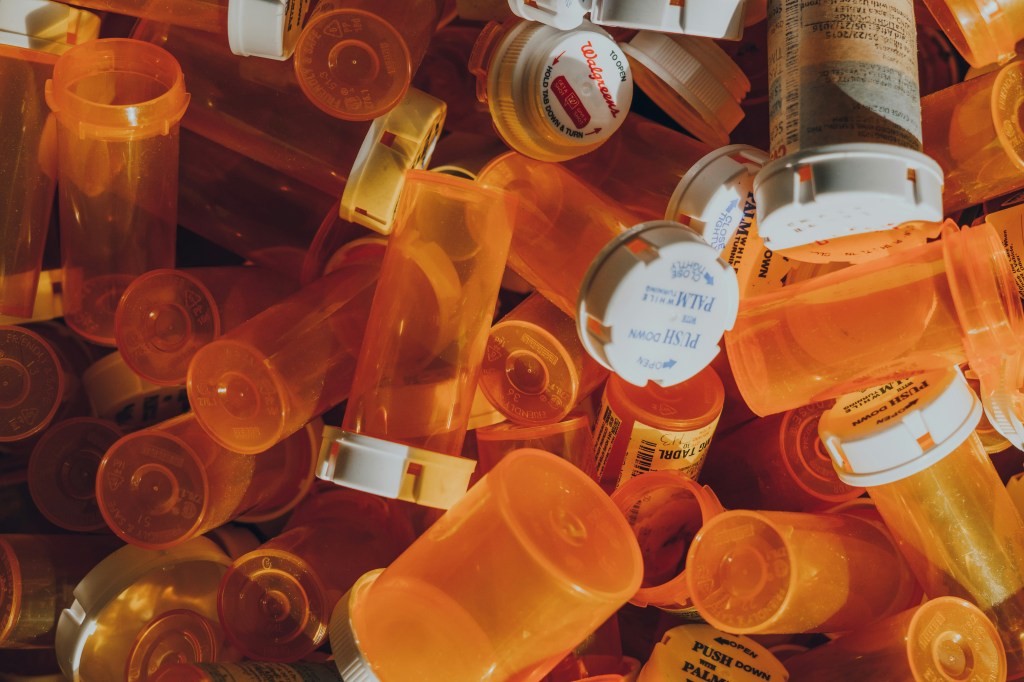
When you pick up a prescription, you probably don’t think about the environmental footprint it leaves behind. But the reality is that healthcare generates huge amounts of single-use waste. From the vial that holds your medication to the mask your pharmacist wears to protect you.
It’s a system designed for safety but built on disposability. The current system is based on a linear economy.
What’s in the Healthcare Waste Stream?
Every single day, pharmacies, clinics, and hospitals throw away:
- Millions of prescription vials
- Masks, gloves, and PPE
- Syringes, blister packs, and sharps containers
- Medical packaging that is almost never recyclable
Most of these items are made of durable plastics that last hundreds of years, yet they’re intended for just one use.
The World Health Organization estimates that during the COVID-19 pandemic alone, 87,000 tons of PPE waste was generated globally (that’s the weight of ~14,500 adult elephants (each ~6 tonnes), overloading landfills and polluting oceans.
Well, Why Can’t We Just Recycle It?
You might assume these items are recyclable. Unfortunately:
- Prescription vials are often too small for most recycling facilities. While prescription vials are recycling according to the Waste Wizard Toronto app, only around 9% of all waste generated in Canada is genuinely recycled. That means 91% ends up landfilled, incinerated, or otherwise disposed, despite being collected or separated
- Masks and gloves are contaminated with biological materials, so they’re treated as medical waste
- Blister packs & syringes contain mixed materials that are hard to process. The
- The mixed materials (e.g. plastic and paper) have to be separated by the user, which never happens
- Most single-use healthcare plastics are either landfilled or incinerated, contributing to microplastics and toxic emissions
So the cycle continues: made for a moment, lasting for centuries.
The Carbon Footprint of Healthcare
Healthcare is supposed to protect life, but it also contributes significantly to climate change.
- In Canada, healthcare accounts for ~5% of the country’s carbon emissions. This is roughly equal to emissions from 7.3 million cars; that’s about every car in Ontario and Quebec combined.
- Medical plastic waste contributes to microplastic pollution, which has now been detected in human blood, lungs, and even arteries linked to heart disease
National Geographic – Microplastics Linked to Heart Disease
Can We Do Better?
Yes. Some parts of healthcare waste can’t be avoided for safety reasons, but not everything has to be single-use.
This is where small, targeted changes can have an outsized impact.
The VialCycle Solution: Reuse Where It’s Safe
We can’t reuse syringes. We can’t reuse contaminated PPE.
But we can safely reuse durable prescription vials.
VialCycle is a simple, pharmacy-friendly system that:
- ✅ Provides durable pharmaceutical-grade glass vials that patients can return for refills
- ✅ Fits existing pharmacy labeling workflows
- ✅ Reduces thousands of single-use plastic vials per year
- ✅ Creates a visible sustainability step without adding extra work
It’s not the entire solution to healthcare waste—but it’s a tangible, achievable first step.
How You Can Be Part of the Change
- 💊 Ask your local pharmacy if they’re offering reusable vials
- ♻️ Support pharmacies piloting VialCycle to reduce waste
- 📢 Share this post to spark conversation
- 💡 If you’re a pharmacy, join the VialCycle movement!
Healthcare won’t become zero waste overnight. But by starting small with something as simple as a prescription vial, we can begin to rethink what really needs to be single-use.
Final Thoughts
Pharmacies shouldn’t have to choose between patient safety and sustainability. By rethinking what we discard and reusing what we can, we can reduce plastic waste and move toward a cleaner, healthier future.
Small changes in pharmacy can create big changes for the planet.
 VialCycle's Blog
Leave a comment